DESIGN A CHARACTER WITH A REASON TO EXISTYour TADC OC
design guide.
Use the artwork as a beginning. Let a role, a limitation, and a relationship shape the character you write.
01Choose one impossible body rule
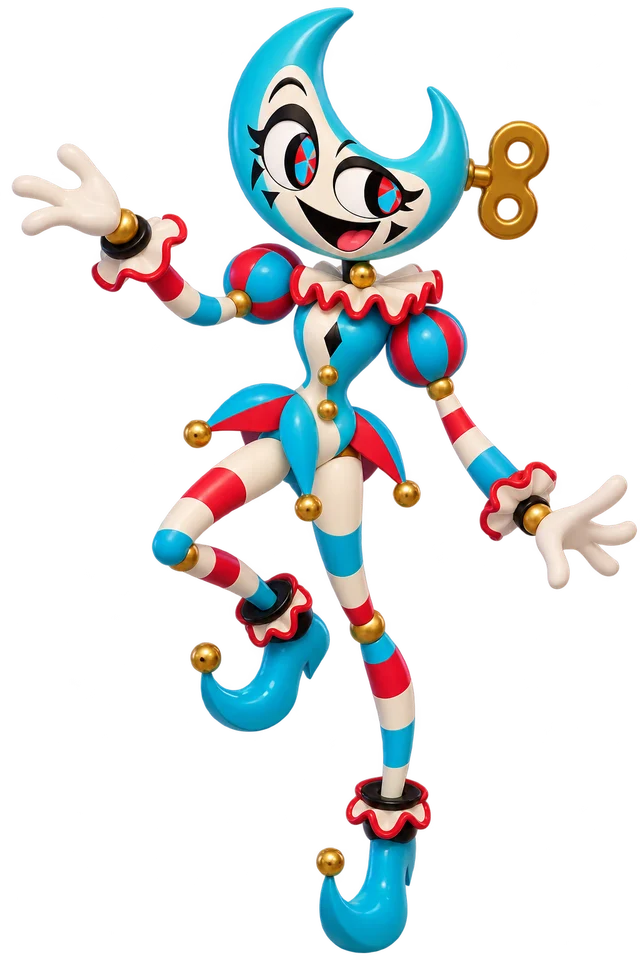
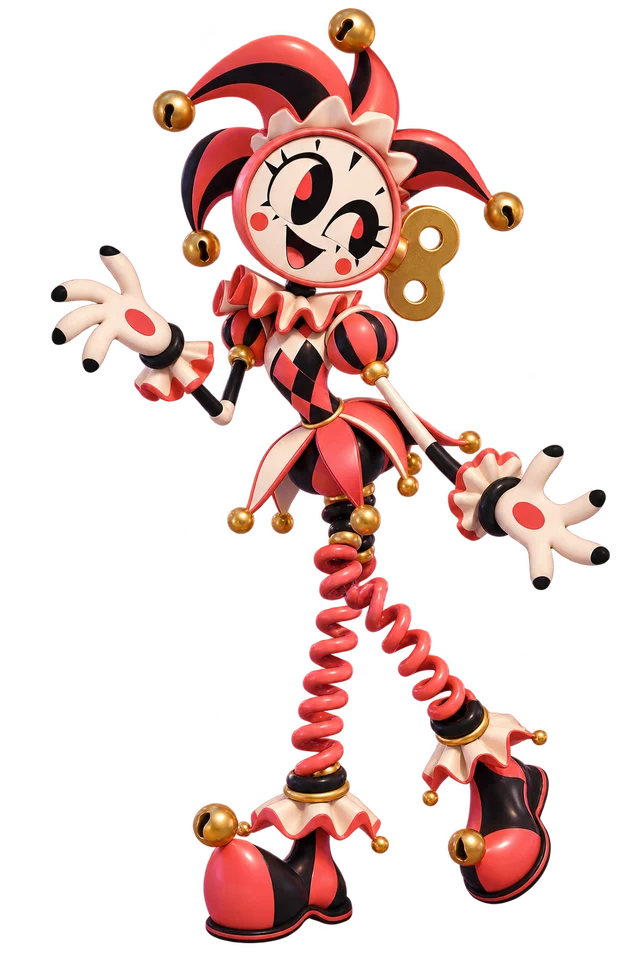
Start with a floating head, a wind-up torso, or spring legs. One strong rule is easier to understand than a collection of unrelated oddities. Decide what everyday action becomes difficult because of that body. Sitting down, holding a prop, or waiting for another person can become a character moment. The unusual design should influence behavior throughout the story.
02Separate bright appearance from inner tension
A glossy toy exterior can hide a fear of mistakes, a need for control, or difficulty asking for help. Pick one tension and show it through a small decision. A performer who constantly adjusts a bow may be trying to feel prepared. Avoid explaining every feeling through long exposition when a repeated gesture can make the same idea visible.
03Build a performance around the silhouette
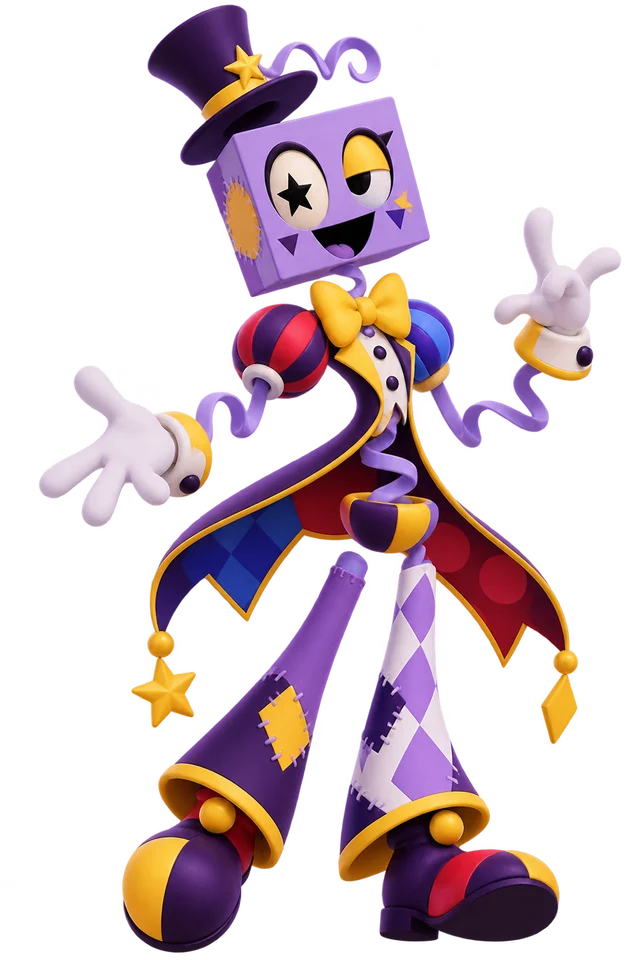
An acrobat’s long limbs, magician’s movable parts, or mime’s spring legs should help the audience understand the act. Reuse a few shapes in the costume and props. Circles, stripes, cubes, and stars provide a readable pattern. Keep enough empty space around the silhouette that the character remains identifiable on a small card or a crowded cast sheet.
04Give the digital limitation consequences
A glitch should change a task or relationship instead of serving only as decoration. If the head rotates involuntarily, decide how the character adapts when speaking to a friend. If movement needs winding, decide who can help. Consistent limitations create room for trust, frustration, and practical solutions without requiring your OC to control the whole setting.