DESIGN A CHARACTER WITH A REASON TO EXISTYour FNAF OC
design guide.
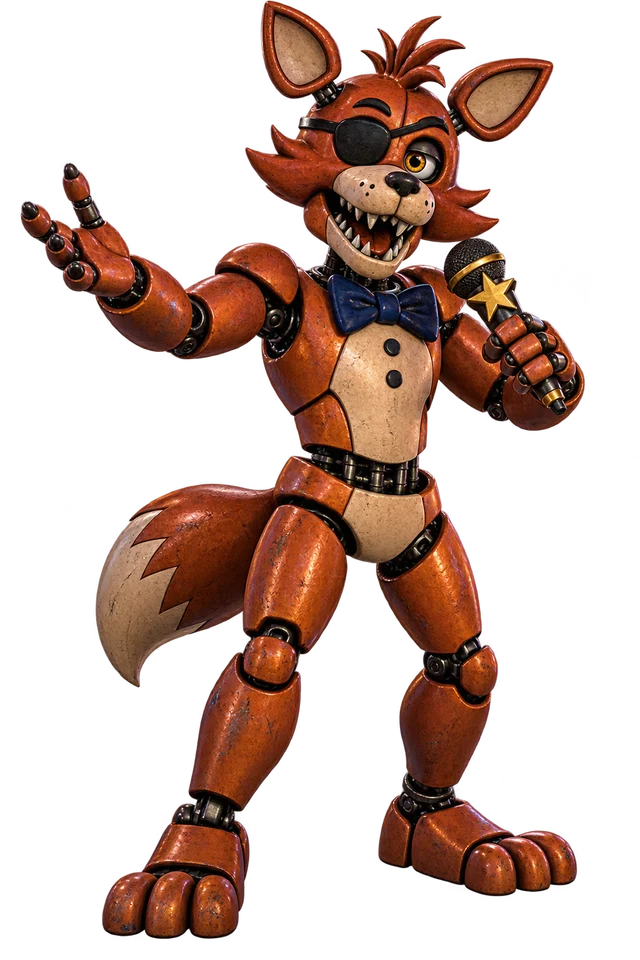
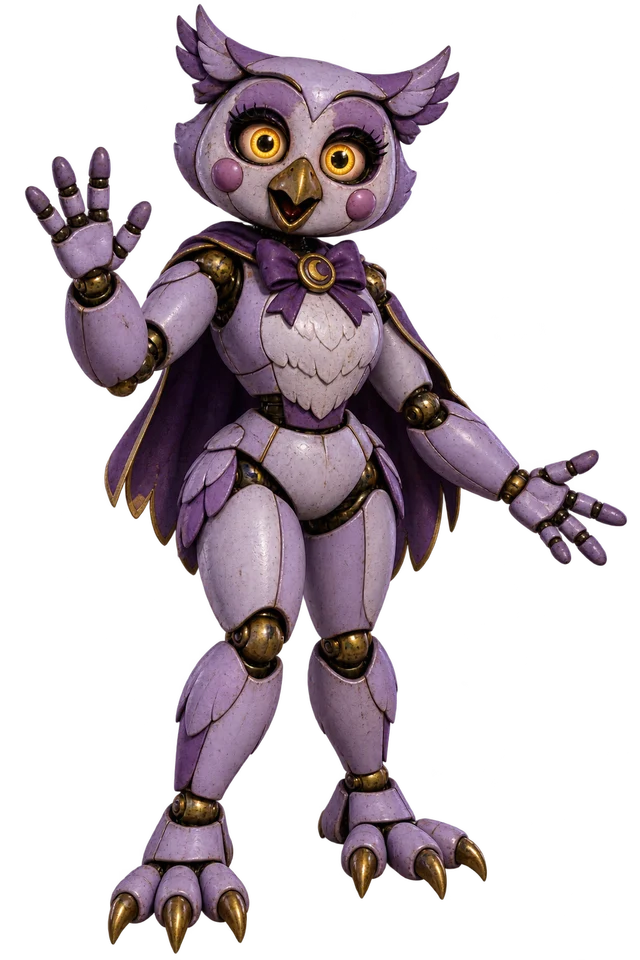
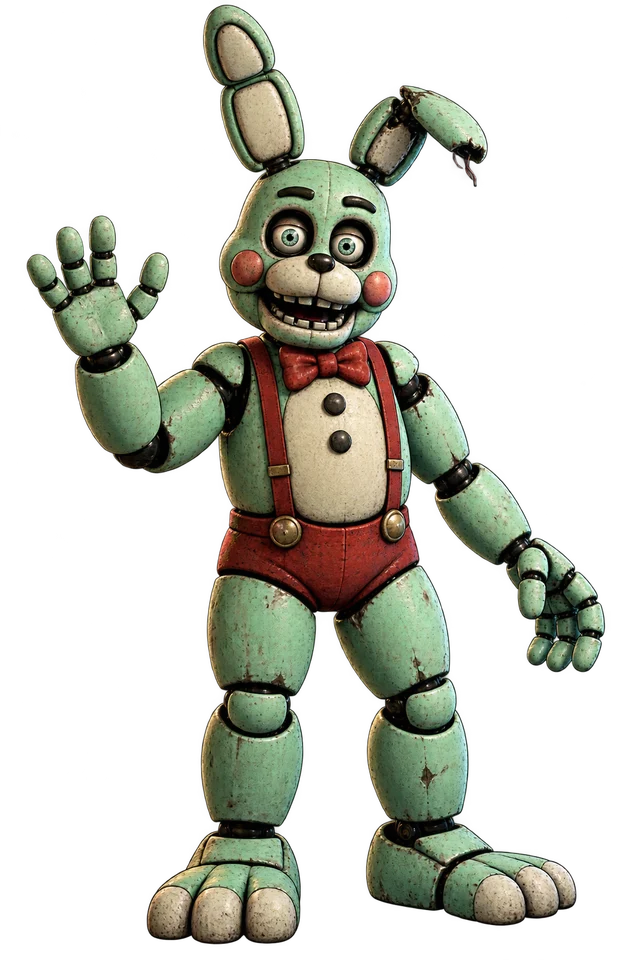
Use the artwork as a beginning. Let a role, a limitation, and a relationship shape the character you write.
01Start with the daytime attraction
Give the mascot a job a family venue would actually need: greeting visitors, introducing a show, or guiding a queue. That role explains the microphone, cape, or costume shape. It also gives the nighttime behavior a recognizable source. A character who once followed applause can become unsettling by responding to the wrong sound, without needing a long list of unrelated supernatural powers.
02Use mechanical details consistently
Separate the outer shell, fabric accents, and visible joint structure. Decide which parts move and where a technician would reach them. A damaged ear can affect hearing; a locked joint can change the walking pattern. Keep those effects consistent through your notes. Mechanical wear is most convincing when it changes behavior, rather than appearing as scratches scattered over every surface.
03Build a readable movement rule
Write one ordinary pattern and one exception. Your animatronic might return to a service door after each announcement, then stop doing so when the speaker fails. This produces a discoverable rule for a story or game concept. Avoid describing an enemy that can appear anywhere at any time, because a character with no boundaries leaves other characters with few meaningful decisions.
04Let atmosphere carry the tension
Use warm stage colors, dim corridors, and familiar accessories in unfamiliar contexts. An unchanged smile under emergency lighting can be more effective than adding excessive damage. Keep the three example designs distinct through animal shape, material, and venue role. If you plan a story, decide what the night worker can observe before deciding what the worker understands about the mascot.